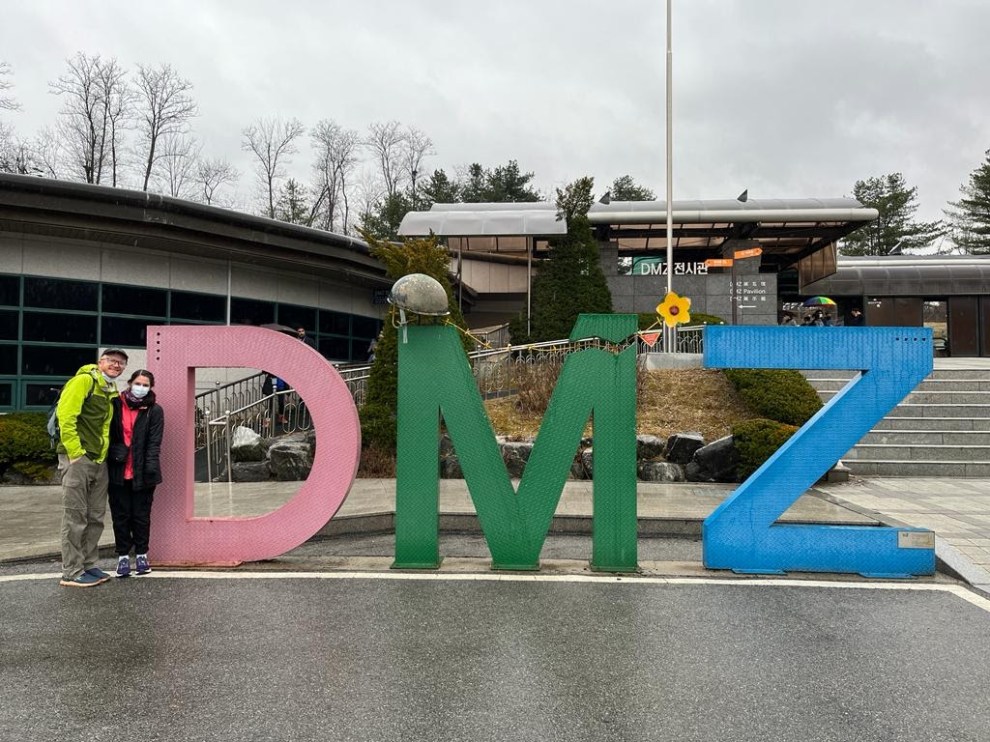
This was the day Grant had been looking forward the most during our visit in South Korea. Our guide, Sebastian (his Korean name was Tessic), picked us up from our place around 7:15 am and it was off to the DMZ area about 45km north of Seoul.
Once we got to the DMZ, our guide was off to check us in while we grabbed some coffee and pastries. This is where we learned that it’s apparently common to have noodle dishes for breakfast as well, as we saw a lot of locals eating them. We knew it would be cold and rainy for the tour, but I was not fully mentally prepped for the temperatures. And in the midst of all our travels, the zipper on my coat broke off. Grant made fun of me as I had so many layers on between my coat, rain jacket, and smartwool top. (This became a theme throughout the week as the temps continued to stay chilly in Korea).

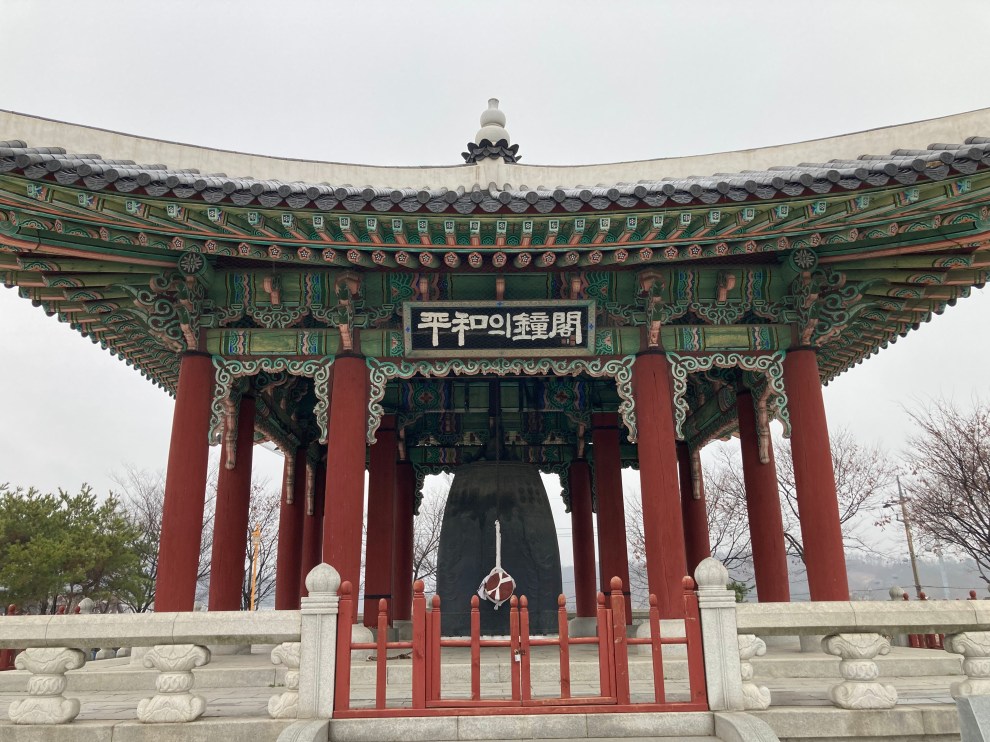
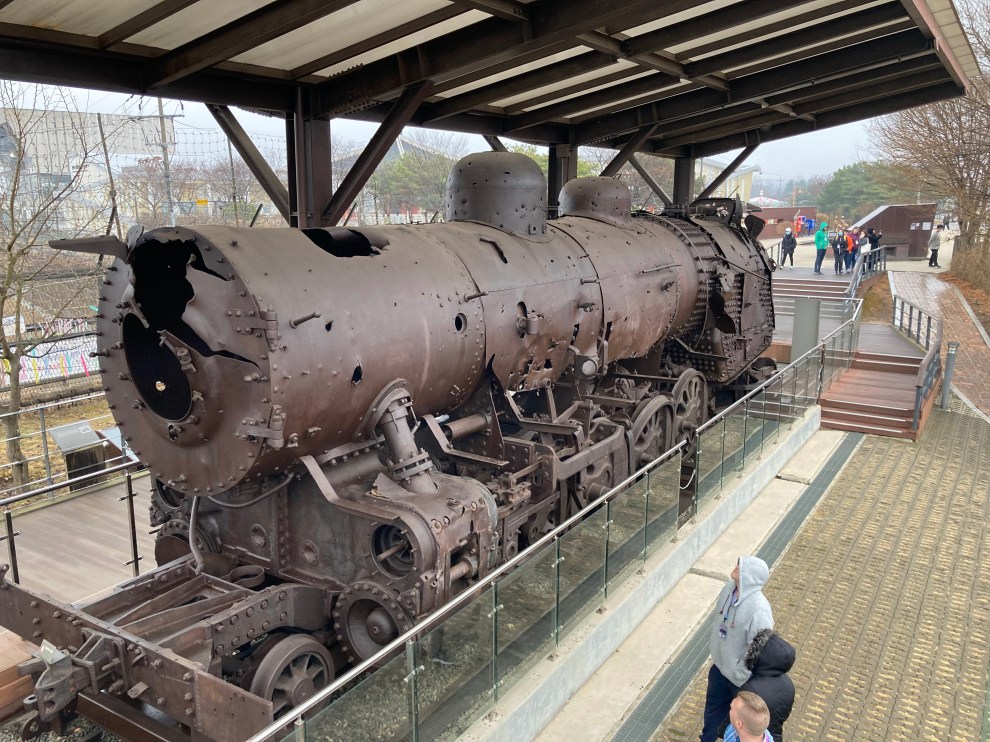
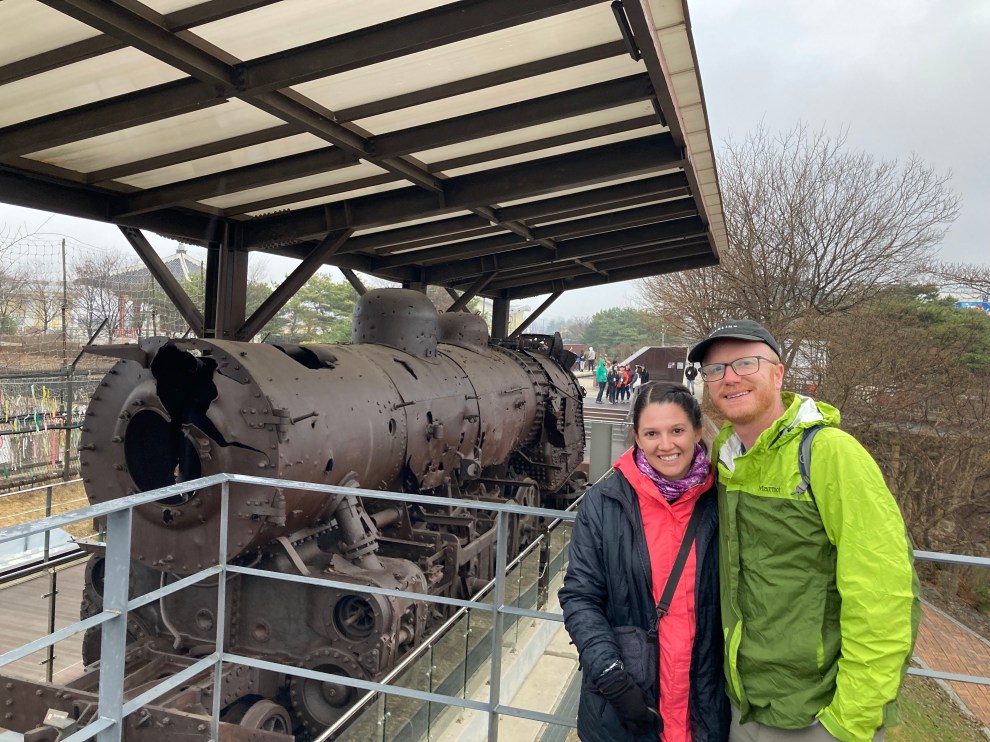
After getting checked in, our guide told us our tour wasn’t until 10am so we had about 45 minutes to kill. We walked towards an old train track to see part of the route between North/South Korea that had been blown up during the Korean War. The train pictured below sat in the no-man’s land between the countries for some number of years before the South grabbed it and put it on display. This whole area was a bit eerie as you could still see bullet holes riddled in a lot of the structures in the direction of the North. Nobody has stepped foot in this plot of land for decades. As it was rainy, we sat in a small chapel area to wait out the time before we boarded our bus. Once on the bus, we were told by our guide that they did not allow tourists to take pictures from the bus, only at the stops. This is still an incredibly sensitive military area so they are very careful to try to avoid leaked images of the soldiers, guard stations, etc. He also said to have our passports at the ready as we would be going through a military checkpoint before entering the civilian area.
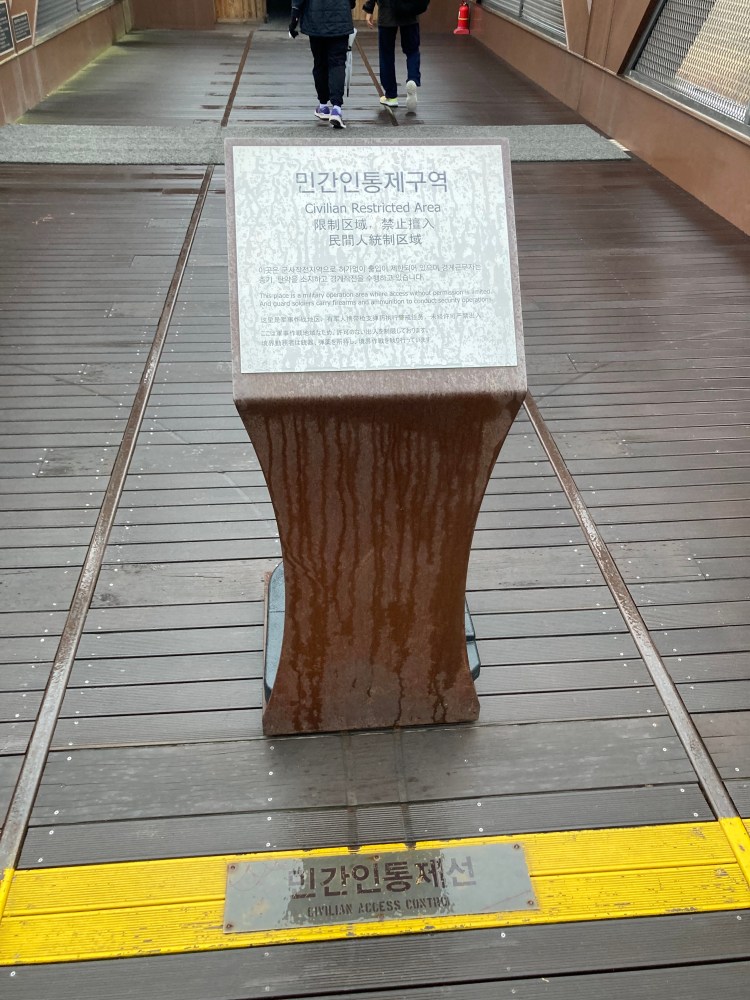
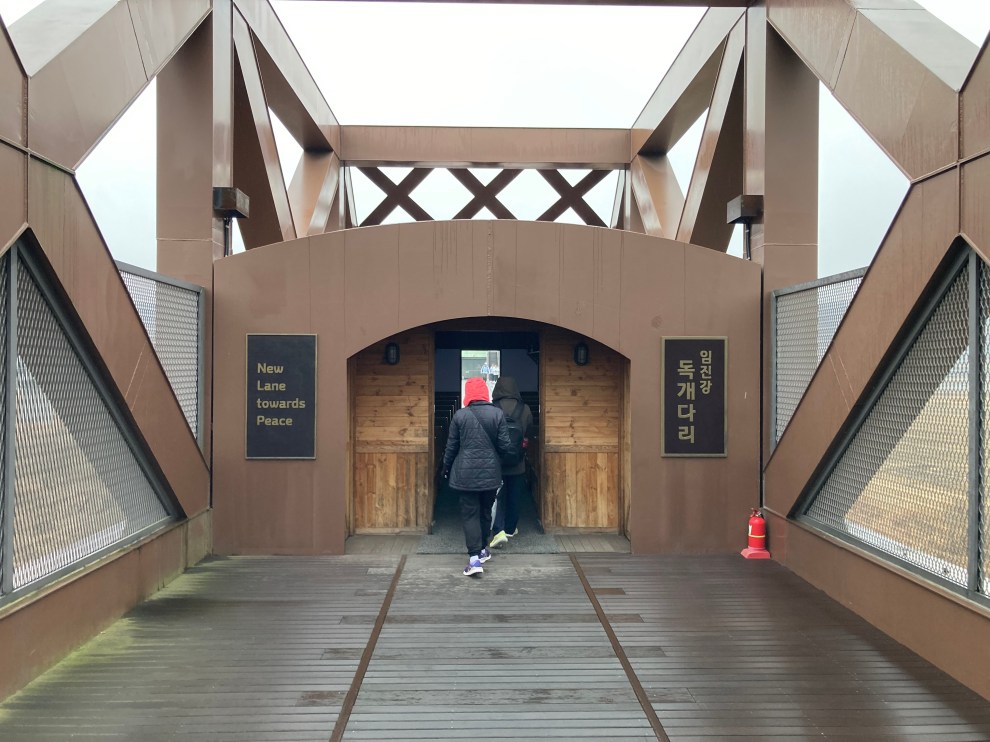
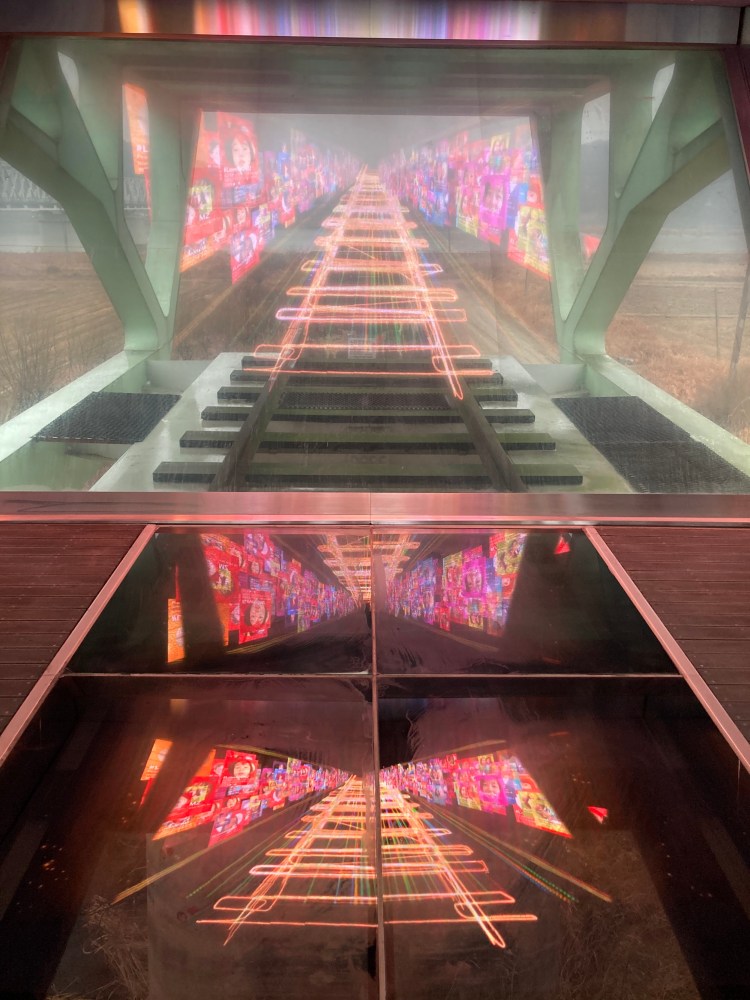
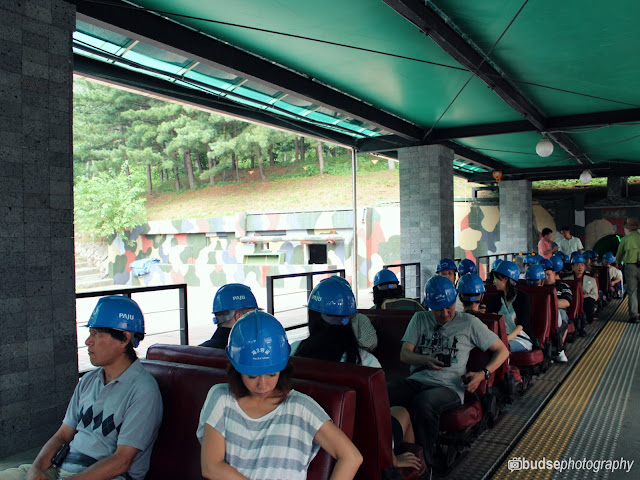
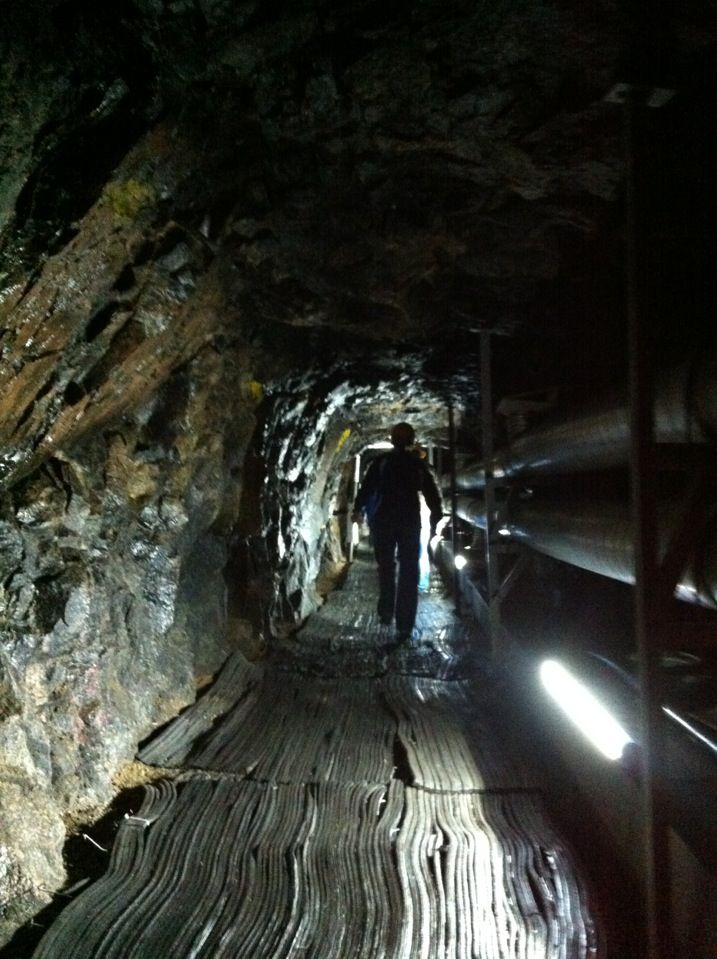
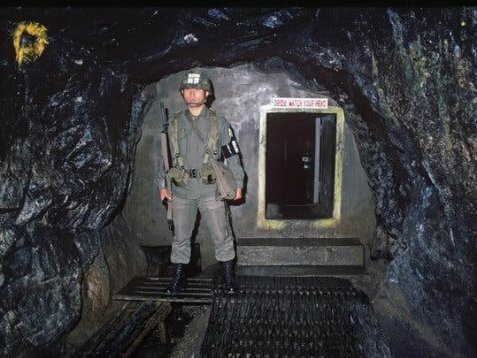
Once through, it was off to our first stop, the Third Tunnel of Aggression. This tunnel was found in 1978 and took about 4 months to locate where it was precisely, after their intelligence told them the North was trying to tunnel all the way to Seoul for a surprise attack (many years after cease fire was called). Our guide told us that they drilled holes into the ground and used PVC pipes to pour water down until one finally exploded with water shooting up into the air. The South Koreans built an intercepting tunnel that went about 73 meters into the ground that they let tourists go down and visit. We took a small train down into the tunnel which was very tight. You could literally touch the walls in the sides be above you. I didn’t think I was claustrophobic but heading that deep under the ground made me feel that way. There were no cameras allowed here as it’s technically a connecting tunnel into North Korea, but here’s an image found online:
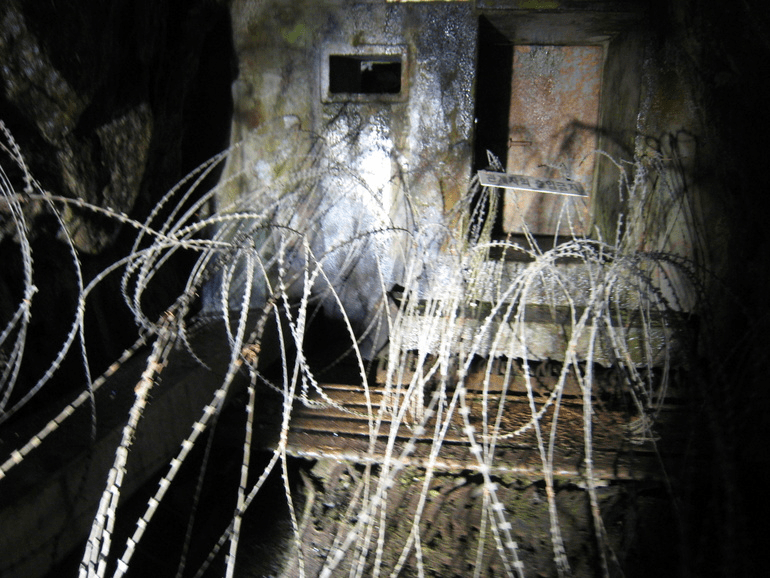
Once down there, there are three small “chambers” in a line that were created that you can see from afar. Each country (North/South) has barbed wire / guarding up on each end, and then a center chamber is an absolute no-man’s land between. They have windows on them so we could see into the center chamber and at some point it seems as though someone planted ferns (or they naturally grew there somehow) and placed a super bright light. It sounded like the guides / South Koreans know nothing about what is beyond that chamber, as it is North Korean territory. Some more canned pictures from the Internet since we couldn’t bring anything:
There was an option to walk up the tunnel but our guide said it takes about 15 minutes to get back to the top and we had a short amount of time to visit the other sections. We realized the DMZ kept things on a strict timeline and only gave a short time to visit each stop. We watched a short video on how the DMZ came to be and their hopes of reuniting Korea once again. One interesting point we had not thought about was the portion discussing the flourishing wildlife in the DMZ. No human has stepped foot in this region for decades, meaning the trees and bushes have grown huge and wildlife have multiplied again.
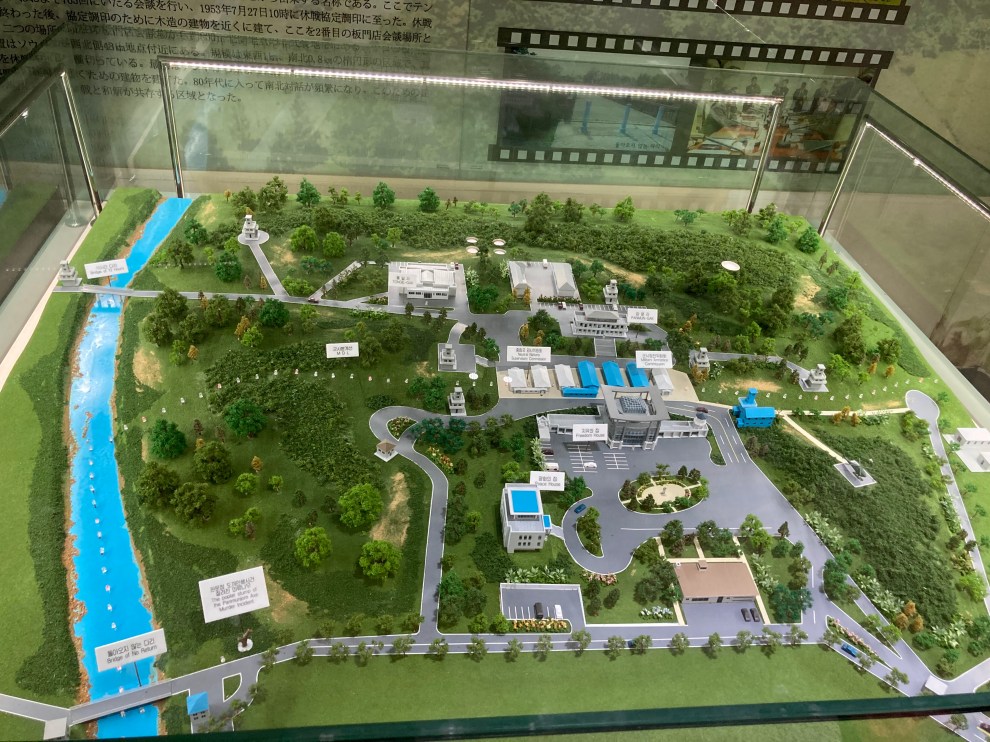
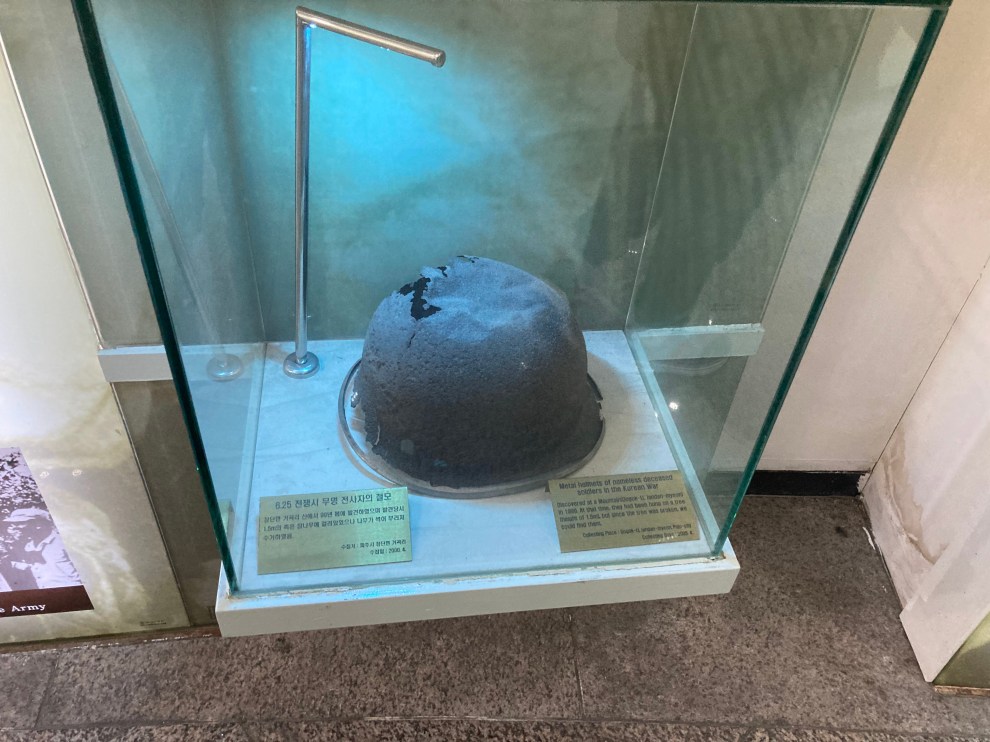
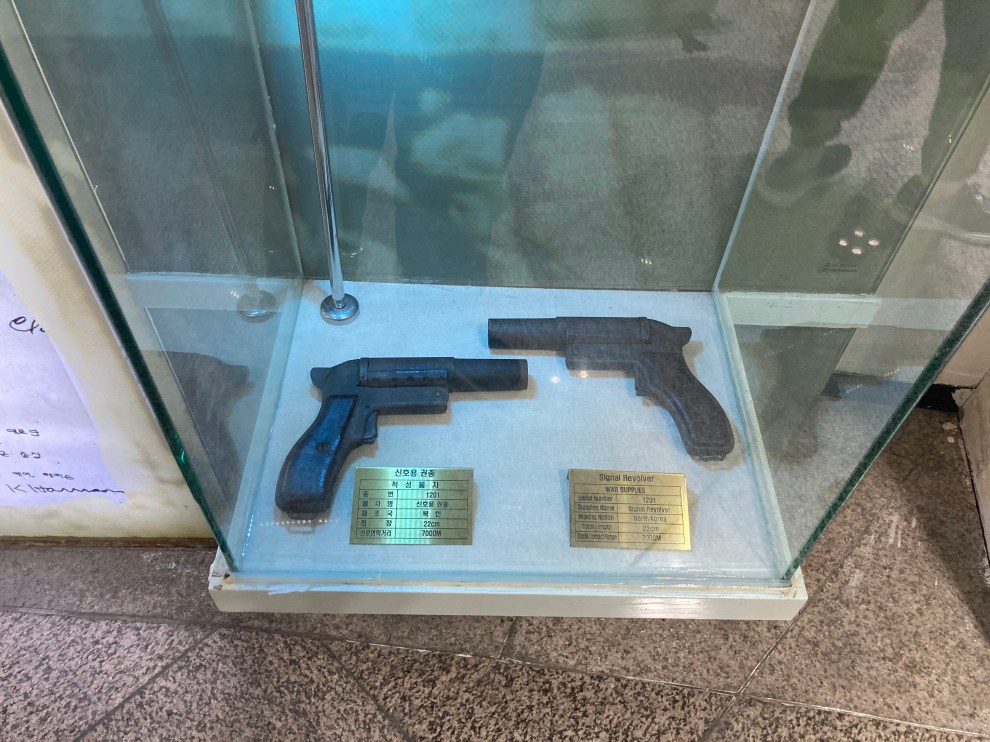
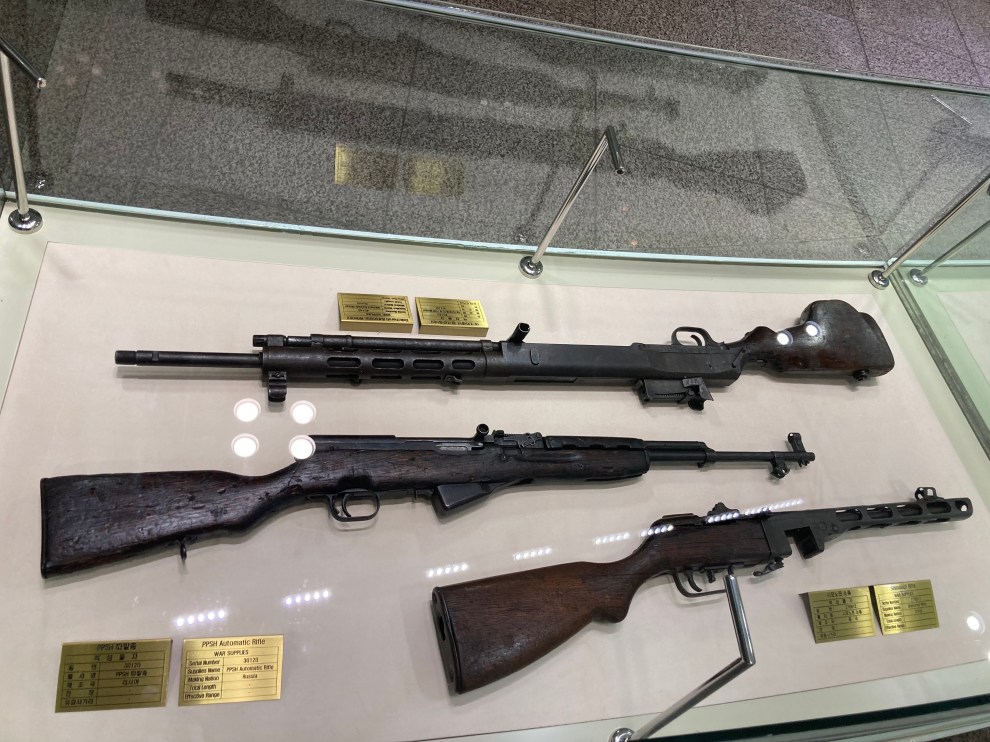
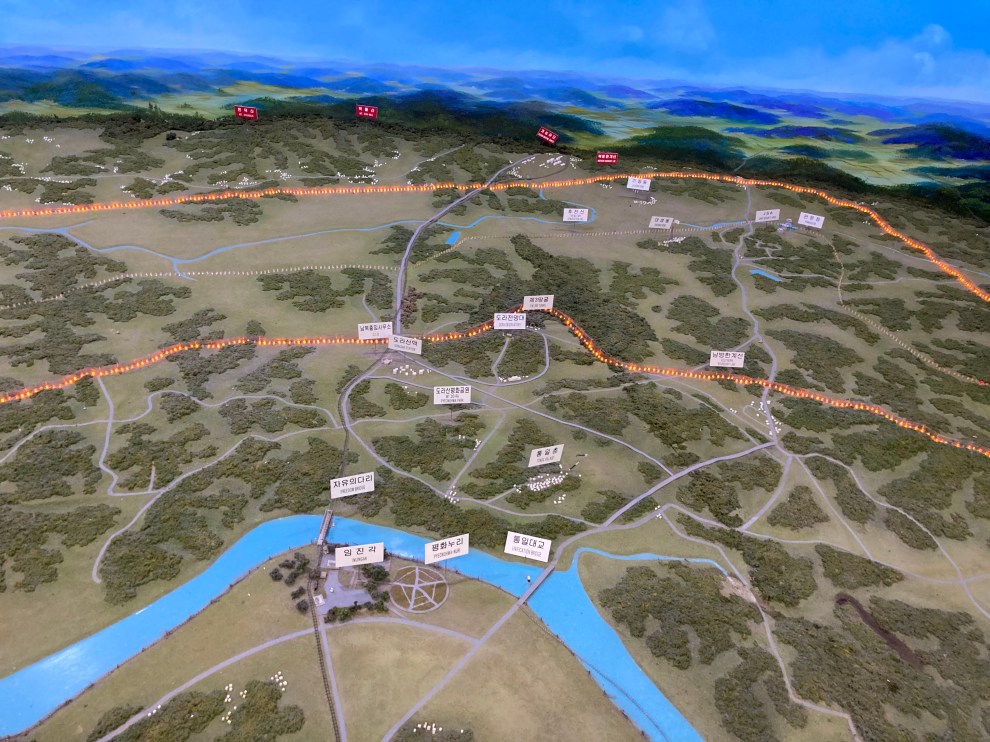
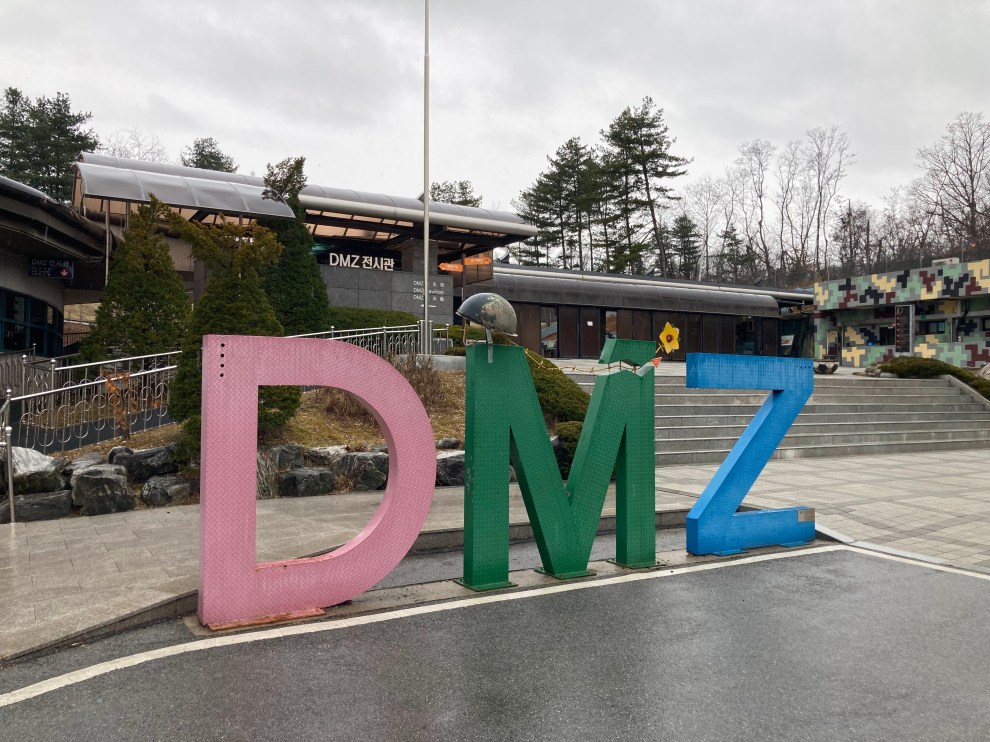
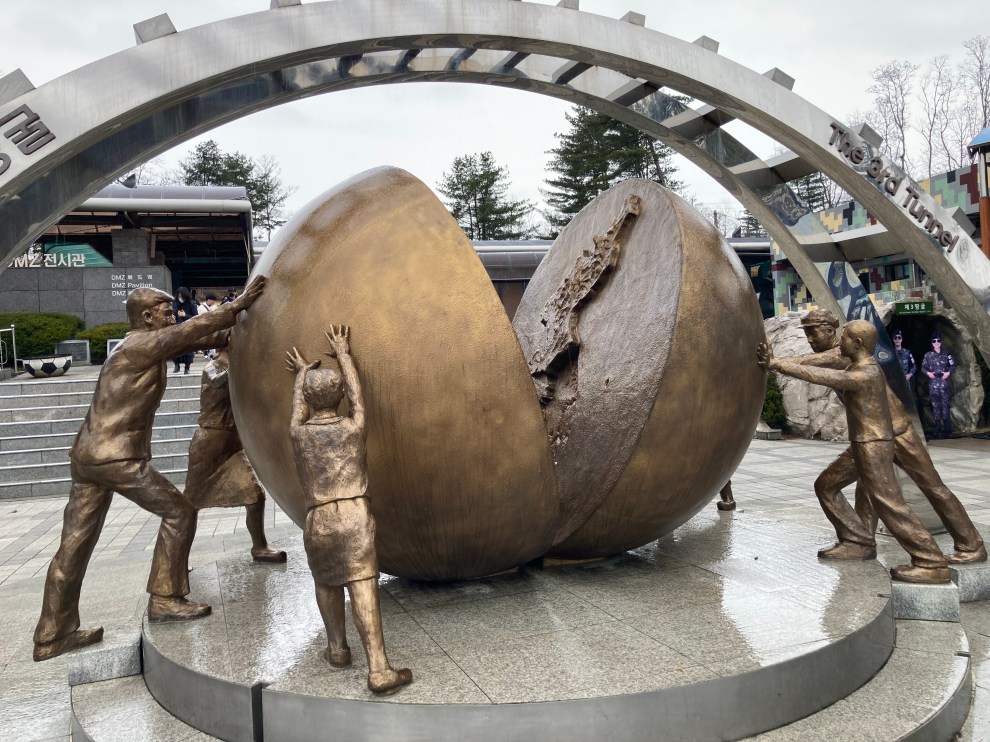
We walked through a short museum showcasing various information about the four tunnels they found and a model displaying the entirety of the DMZ. From what we gathered, upon the South initially finding the tunnels, North Korea claimed the South made them and was trying to “frame” the North. However, there was evidence of drilled holes to blow dynamite in the direction of the South, which would not have been possible for the South Koreans to create. The North then accepted ownership of the tunnels but claimed they were trying to use to mine coal. However, the South Korean government showed there was no geographical likelihood of coal being in the area… plus the three tunnels were all facing Seoul from different starting points. There’s also believed to be over twenty tunnels that have yet to be discovered. As times have progressed our guide said that North Korea has other means to use for war (like long range missiles), so the government isn’t as concerned about tunnels anymore. Though the internet did say there is still a team devoted to finding them.
We also learned in this museum that South Korea never actually had a representative that signed the cease fire agreement in 1953, and an actual treaty to this day has never been signed. The North Koreans and Chinese signed on their end, and various members of the UN (led by the US) signed on the other end, but South Korea did not partake in the agreement as they wanted to see the war finished out.
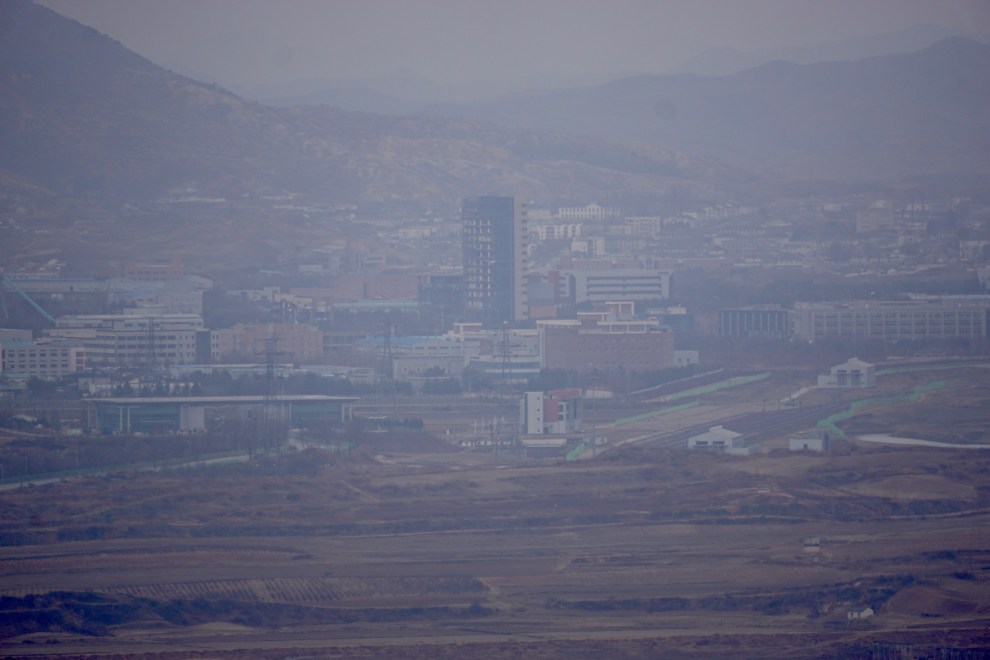
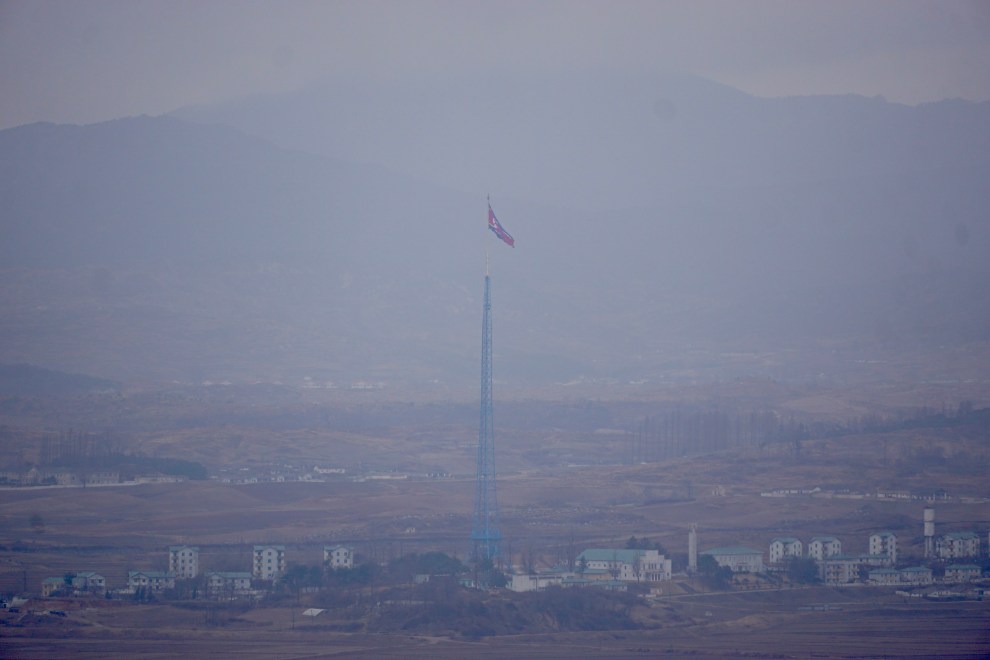
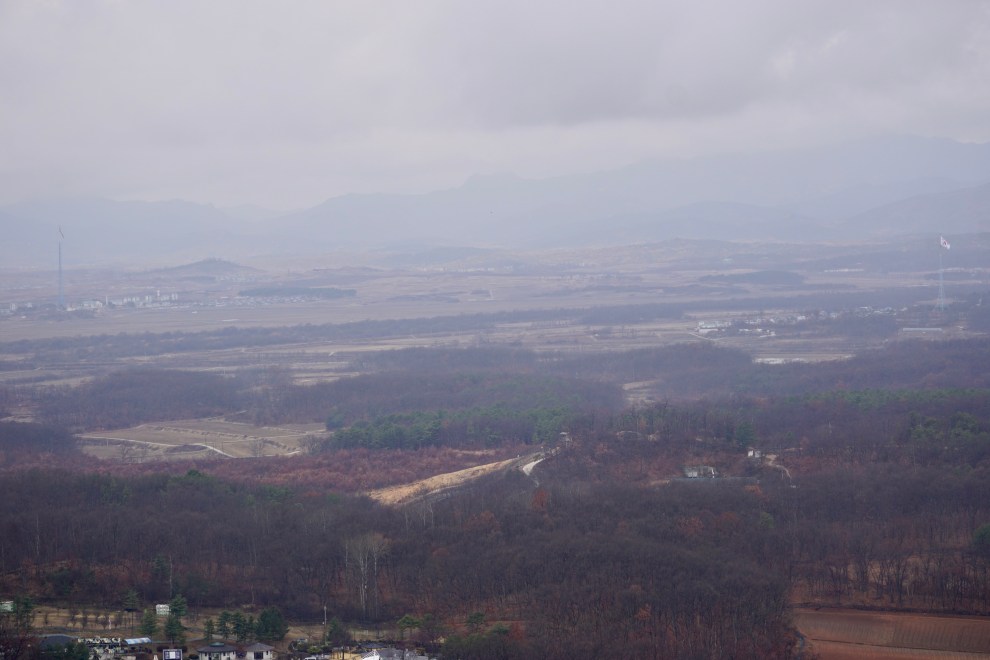
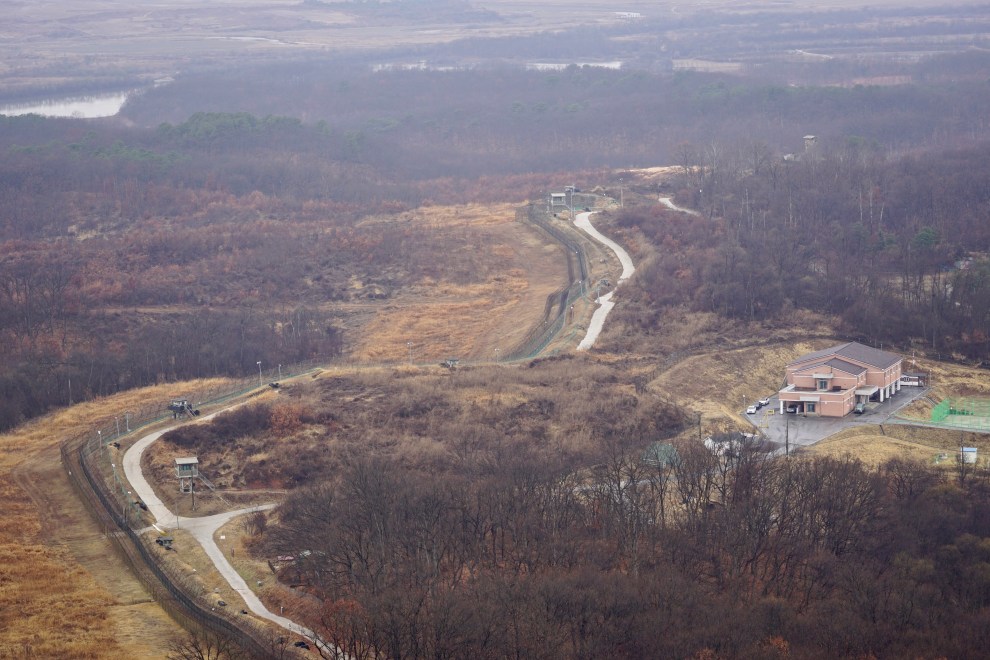
Our next stop was the Dora Observatory. Our guide took us straight up to the third floor to get an overhead view of the DMZ and a small glance into the North Korean side. The first visit to the top floor was cloudy and misty obscuring some of the view into North Korea. However, since our guide kind of rushed us through the bottom floors, we had time to spare to get a second glance. This time the clouds and fog had lifted a bit to get a more clear view. Sebastian told us that on a sunny day you can even see people walking in the city with the binoculars. He also pointed out one of the taller buildings has a lot of windows broken because the workers there are so unhappy (who knows if correct or not)! Although I don’t keep up with politics, especially world politics, it was kind of crazy being that close to North Korea. We later learned that the DMZ area had been closed to tourists the Wednesday and Thursday before we visited due to North Korea launching a missile (and they ended up launching another one later in the week while we were in the country). So they do close the area down when tensions are high.
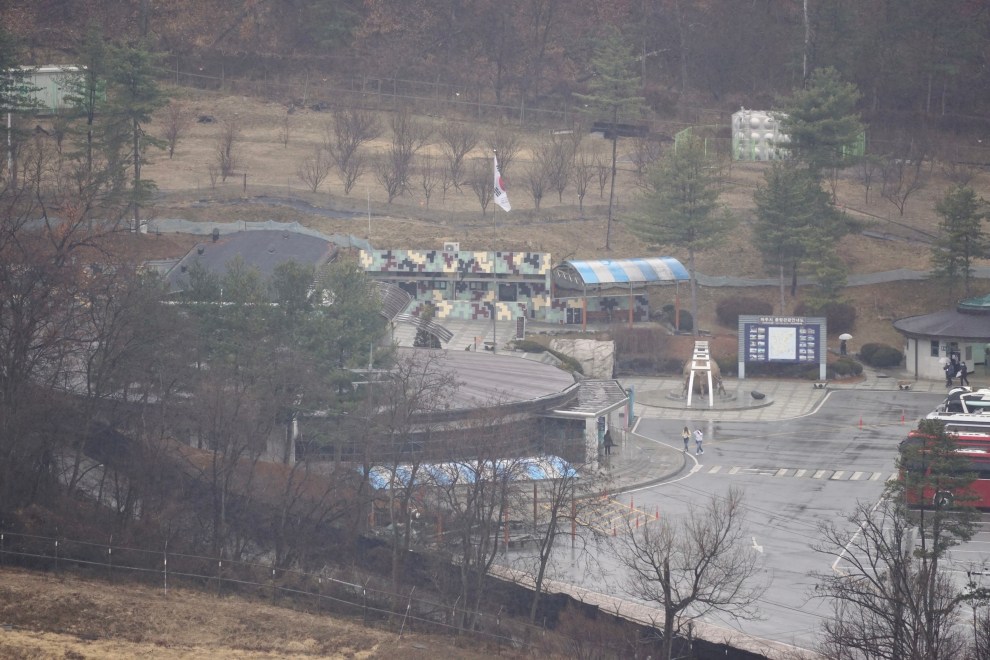

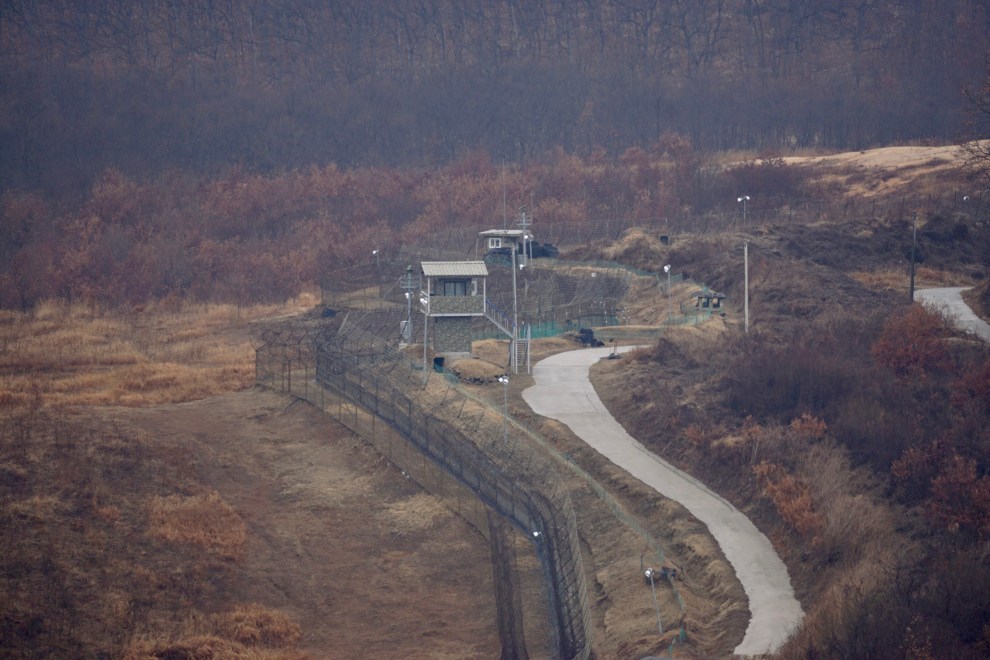
Our last stop of the tour was to visit the local village in the DMZ. There you could buy various DMZ labeled souvenirs and food along with some soy bean ice cream. We learned soy bean is one of the biggest crops they grow in this area and decided to try out the ice cream. It definitely had an interesting flavor but wasn’t terrible. We also tried a fish shaped ice cream sandwich containing vanilla ice cream and red bean paste. We’re not sure why they love red bean paste so much, but they fill it in a lot of desserts with some sort of cream. The ice cream sandwich was definitely better than the soy bean ice cream so I’m glad we saved it for last.
After the tour was over, it was back to the visitors center for lunch. They had a couple of options from hamburgers and pizza to Korean food. We opted for the Korean food and both got the bibimbap which was probably the best we have both had, at least in a while. We learned that day that Sebastian had previously worked in the tech industry and retired when his mom got sick. While caring for her, he realized he wanted to get back into work and found his way into the tourism industry. He told us that they have to take a test and be proficient in English, history, and geography. His English was pretty good at least compared to the people we had met so far in Korea. He likes to be a tour guide because he says tourists are the happiest people on the planet since they’re not working.
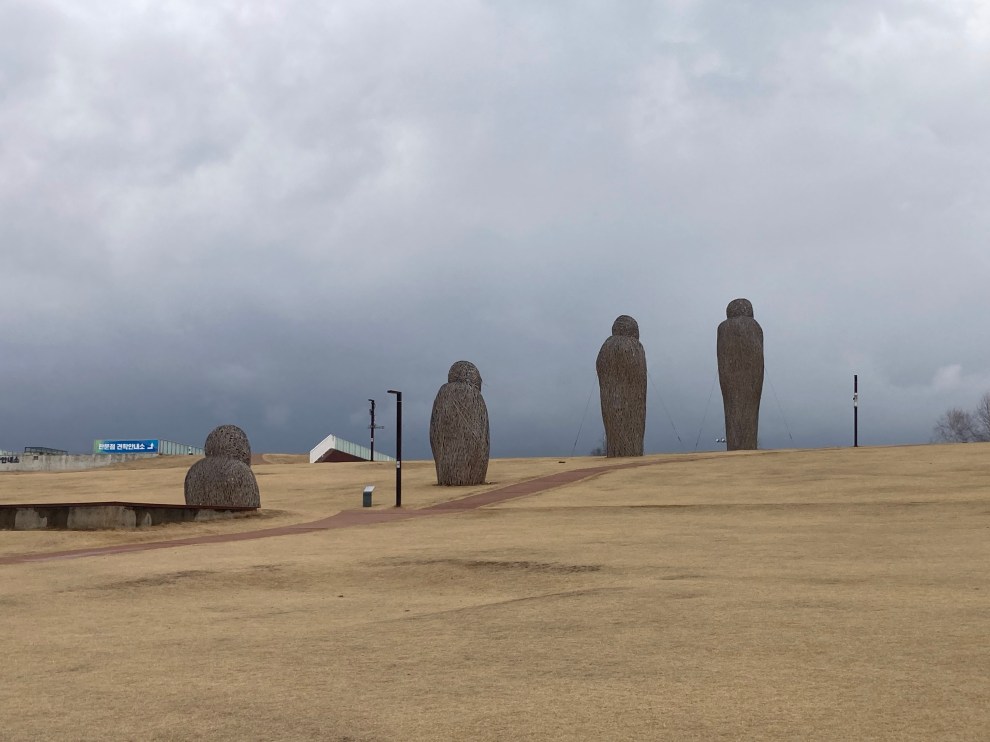
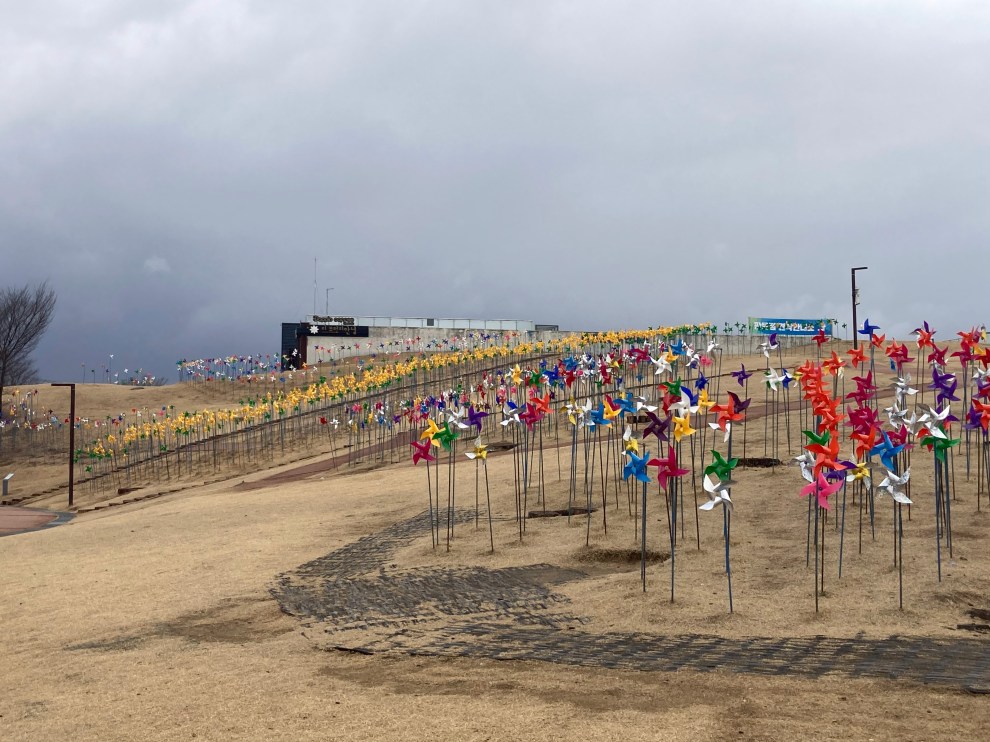
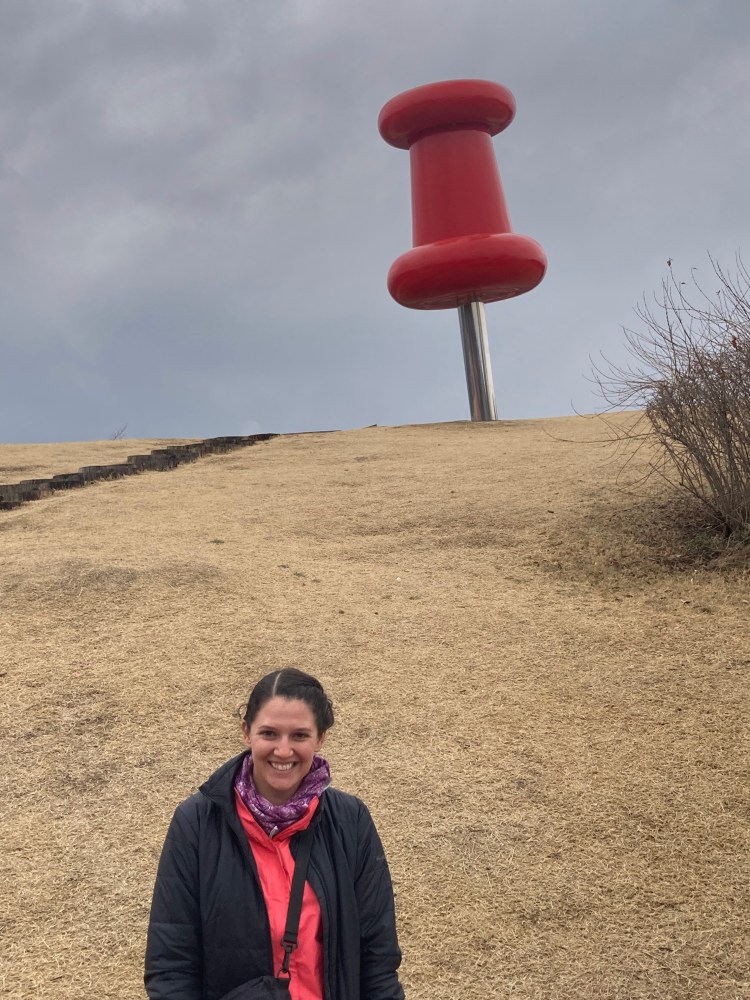
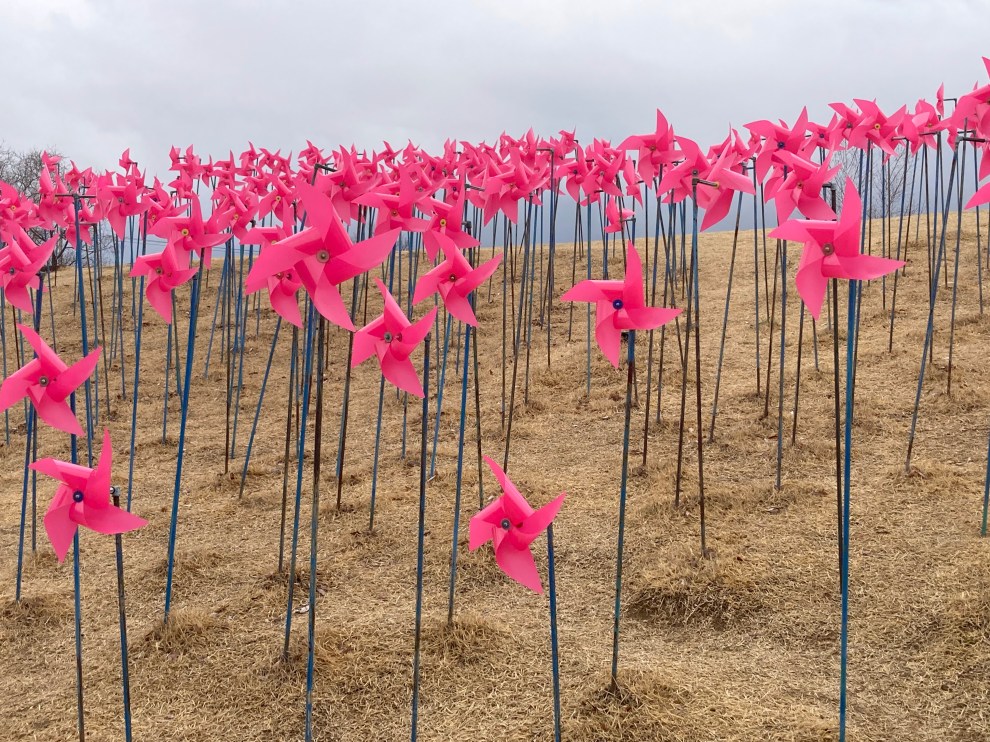
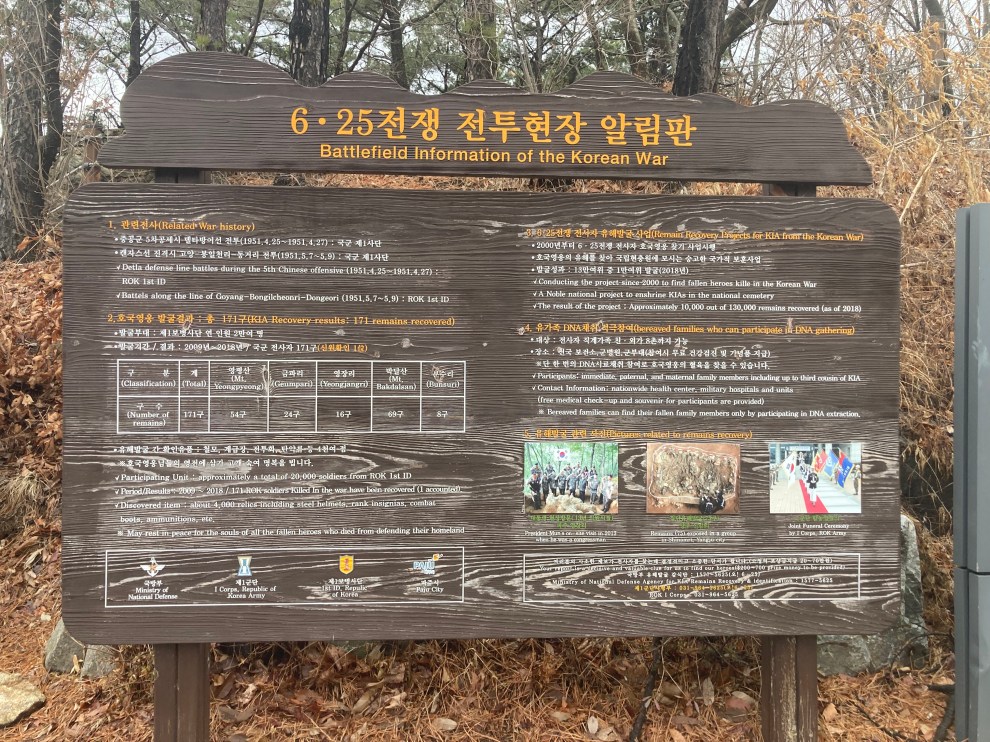
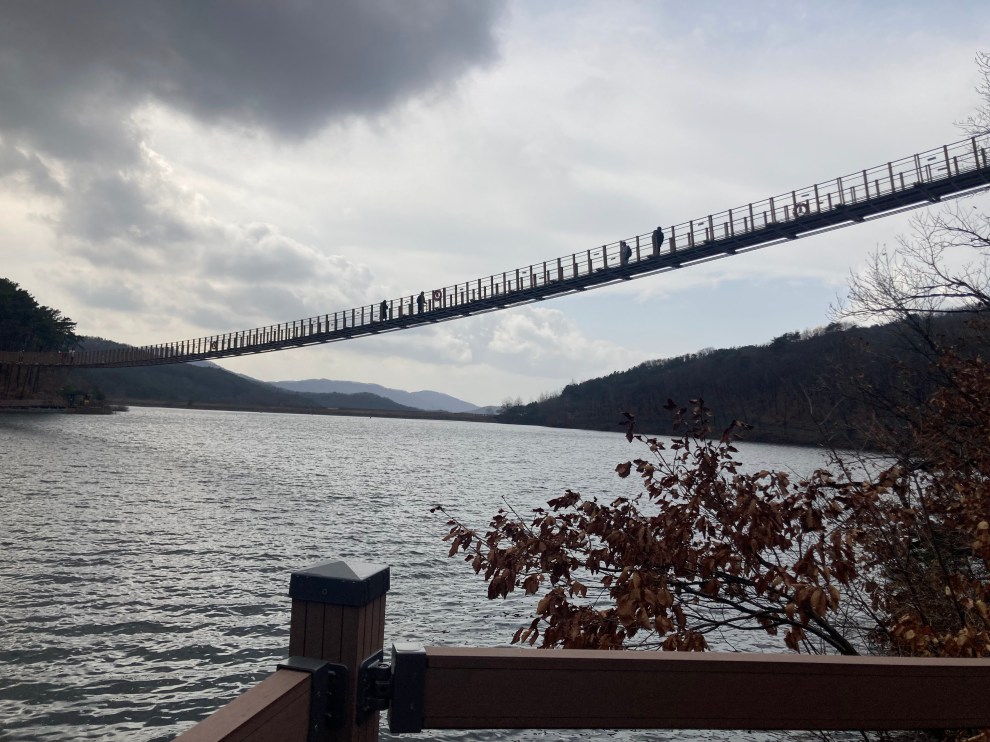
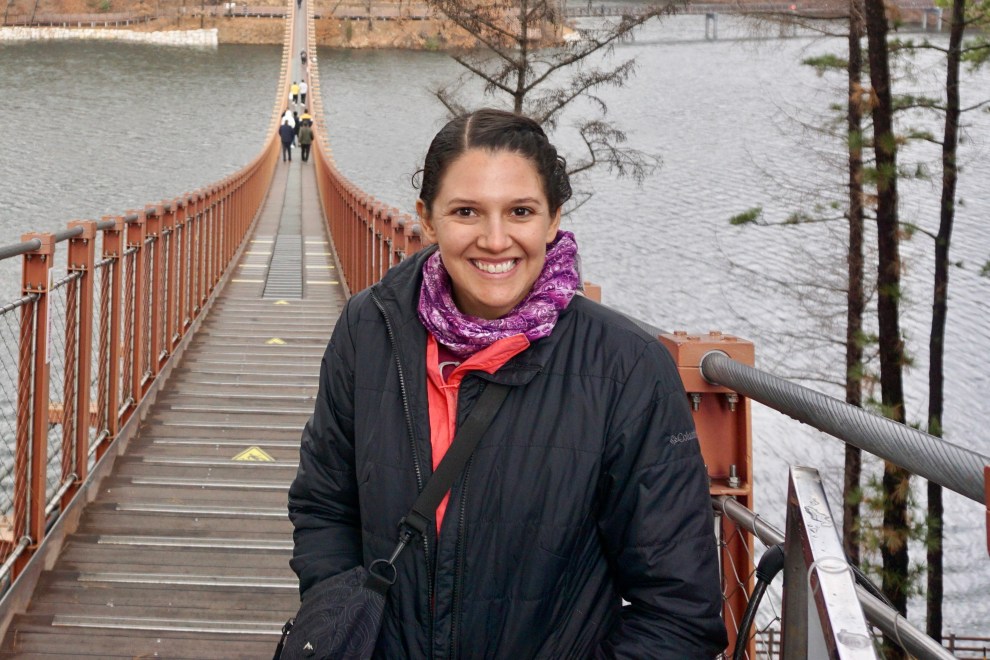
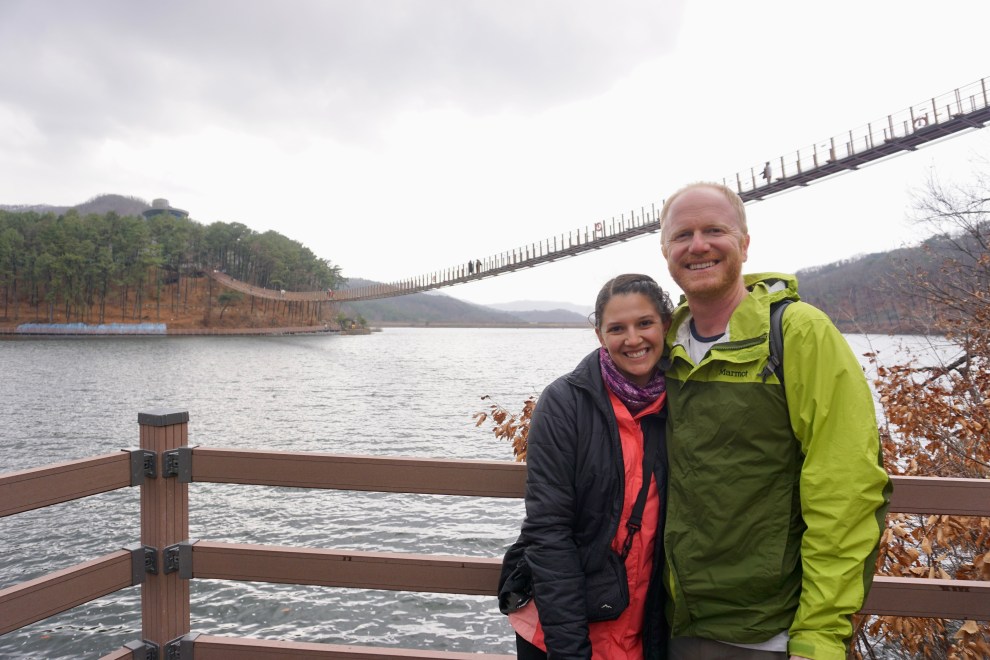
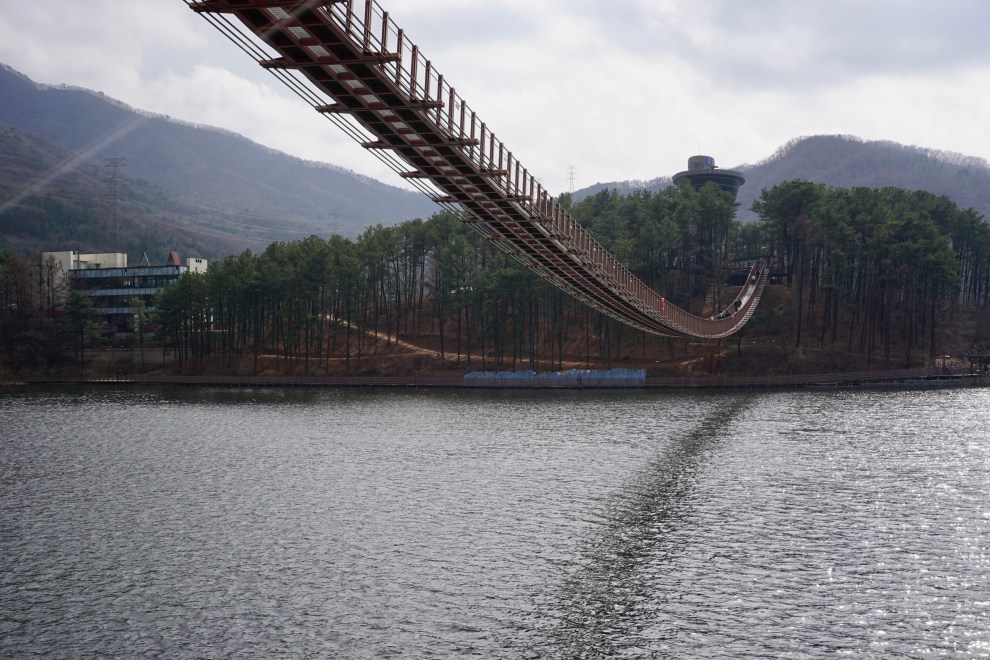
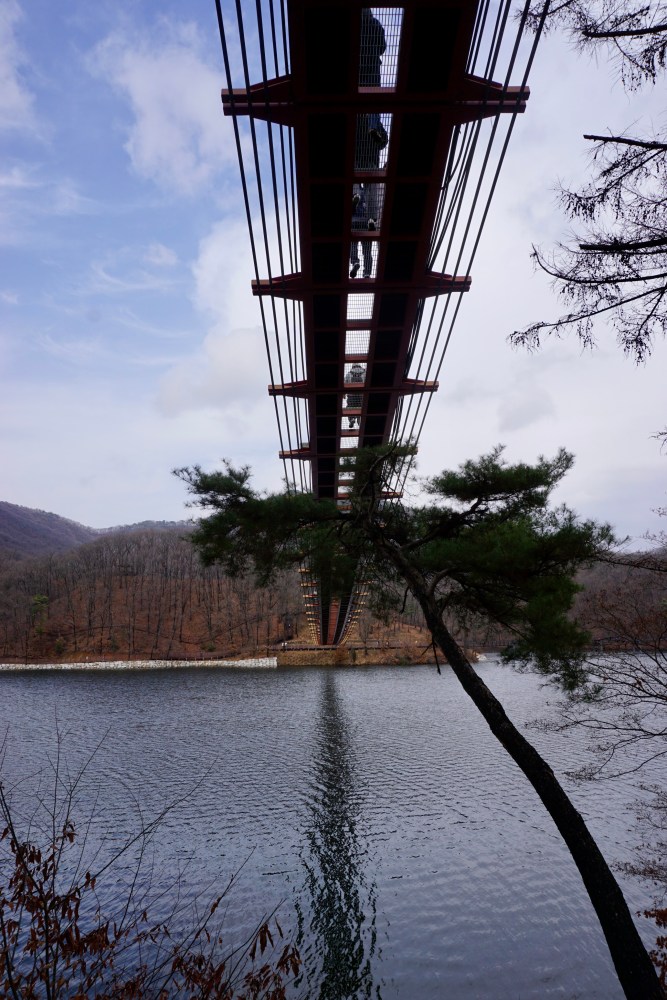
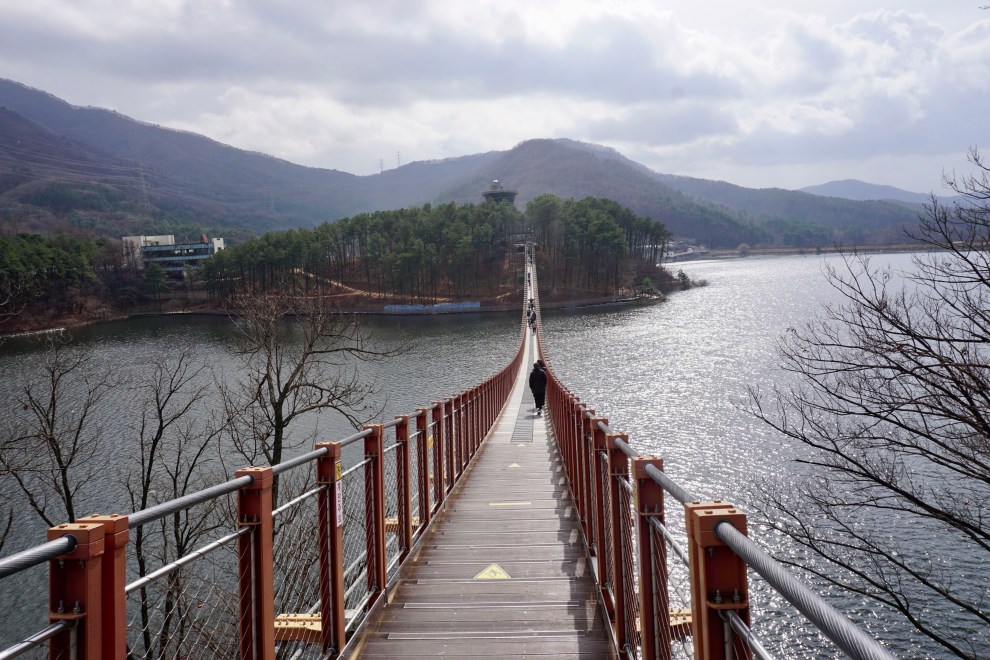
Since the rain had stopped, Sebastian said the Gamaksan Suspension Bridge was open for visitors. We hopped back in the van (finally for some warmth) and drove about 30 minutes to the bridge. Korea has so many reminders of the war everywhere – this bridge was built on the site of a brutal battle the Koreans lost to the Chinese. They kicked off a project in the year 2000 to search for bodies and have recovered 10,000 of estimated 130,000 soldiers as of 2018. War history aside, supposedly this is the longest suspension bridge in Korea and I wish it wasn’t as cold that day so I could have enjoyed the view a little more. Instead, I quickly walked across it while Grant leisurely strolled across taking pictures of the view. After walking around the lake, we grabbed some coffee and it was back to Seoul.

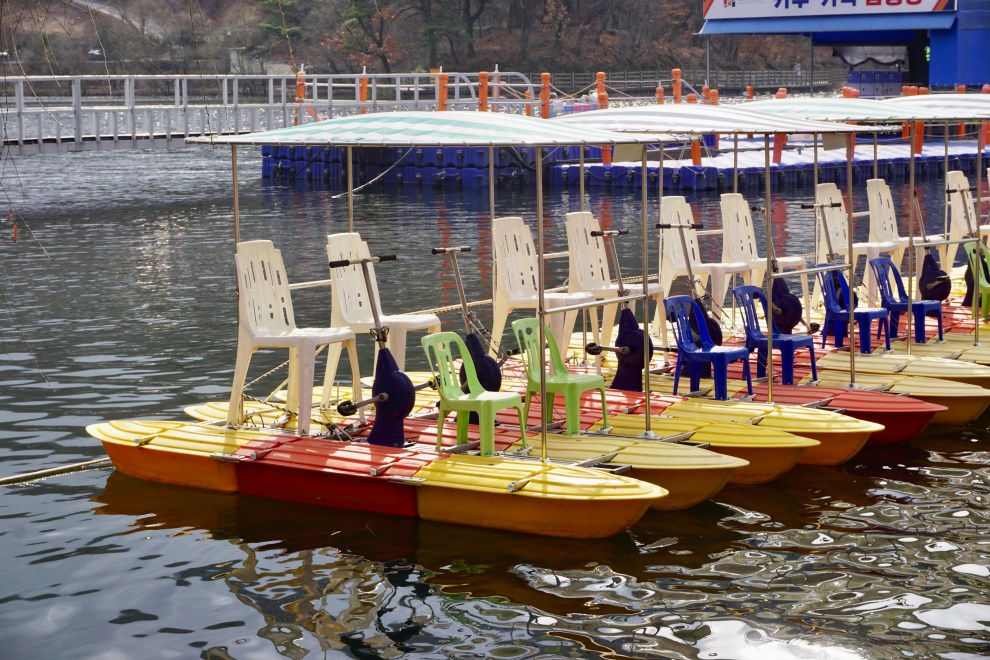
Once back at our place, we took some time to warm up before heading back out for food. I didn’t want to walk too far to find food so we ended up going around the corner to try the KFC. Throughout our travels KFC is by far the most highly represented American fast food chain in almost every country and we were yet to try one! We were so enthralled at all the different options they had to choose from at the kiosk that we held up the line. I had seen a sign for their soy sauce chicken so we grabbed one strip of that to try along with a wrap and sandwich to round out the meal. Tasted just like our KFC but the soy sauce chicken strip was definitely surprising. It kind of tasted like you just took a chicken strip and soaked it overnight in a bowl of soy sauce.
We figured out our plans for the next day and headed off to sleep!
 Rinehart's Roaming The World
Thanks for the tour, I would never have guessed there was a tour at that location.
LikeLike